


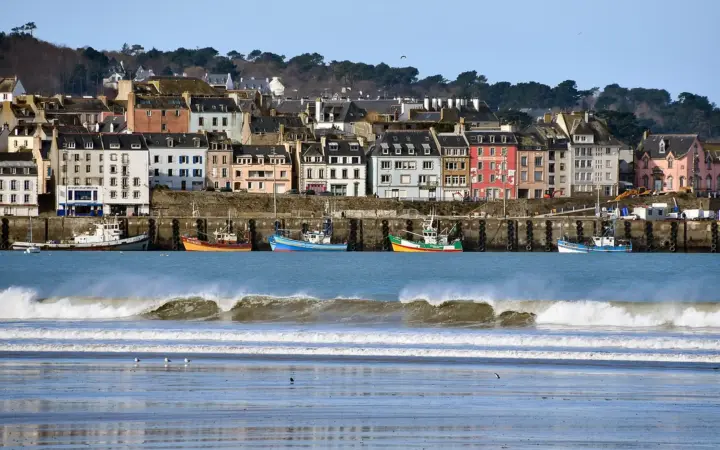
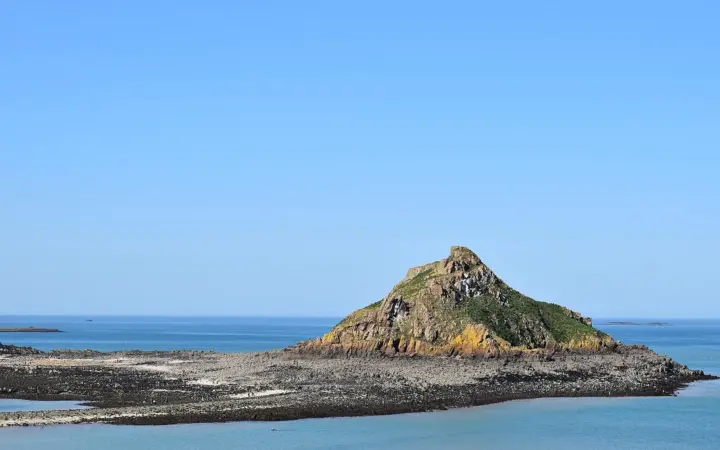
Brittany feels like a country of its own. Its coastline is a spectacle of pink granite, sandy coves and lighthouses battered by the Atlantic; its towns are walled, half-timbered and proud of their Celtic roots. This Brittany travel guide helps you choose the coast, the towns and the season.
Why visit Brittany
Brittany has some of the most dramatic coastline in Europe, huge tides, thousands of prehistoric standing stones and a culture of its own, with its own language, music and festivals.
It is also one of France’s great food regions: crêpes and galettes, salted butter, oysters and seafood, washed down with cider.
Top places to visit in Brittany
Saint-Malo and the Emerald Coast
The walled corsair city of Saint-Malo, the ramparts at sunset and the beaches revealed at low tide. Nearby, Dinan has a medieval old town and Cancale is famous for its oysters. Mont-Saint-Michel is just across the border in Normandy.
The Pink Granite Coast
Around Ploumanac’h and Perros-Guirec, giant pink boulders shaped by the sea line the customs officers’ path (GR34).
Finistère: Crozon, Pointe du Raz and Concarneau
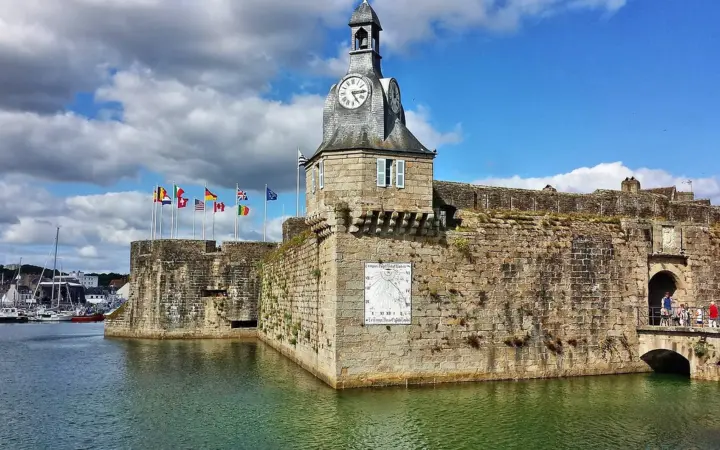
The wild cliffs of the Crozon peninsula and the Pointe du Raz, the walled Ville Close of Concarneau and the half-timbered streets of Quimper.
Carnac and the Gulf of Morbihan
More than 3,000 standing stones in rows at Carnac, and the island-dotted Gulf of Morbihan, best explored by boat. Belle-Île lies offshore.
Rennes and the forest of Brocéliande
The lively capital Rennes has half-timbered houses and a big Saturday market. To the west, the forest of Brocéliande is linked to the legends of King Arthur.
Best time to visit Brittany
May to September brings the mildest weather and long days. July and August are festival season – the Festival Interceltique de Lorient in August is the biggest. Weather changes quickly all year: sun, wind and showers can come in one afternoon. Spring and autumn are quiet and perfect for walking.
Getting to and around Brittany
TGV trains reach Rennes from Paris in about 1 hour 30 minutes, and continue to Saint-Malo, Brest and Quimper. Rennes, Brest and Dinard have airports, and ferries arrive from the UK and Ireland. To explore the coast and villages, a car is the best option; the GR34 coastal path is perfect for walkers.
Brittany itinerary ideas
- Four days: Saint-Malo, Dinan, Cancale and Mont-Saint-Michel.
- One week, the north coast: Saint-Malo, the Pink Granite Coast and Brest.
- The south: Quimper, Concarneau, Carnac and the Gulf of Morbihan.
What to eat in Brittany
Buckwheat galettes and sweet crêpes, kouign-amann (a buttery pastry), far breton, oysters from Cancale, lobster and seafood platters, and salted butter caramel. To drink: Breton cider and chouchen, a honey drink.
Brittany travel tips
- Check tide times: some beaches and islands are only reachable at low tide.
- Pack a raincoat even in summer.
- Walk the GR34, the coastal path that circles almost all of Brittany.
Brittany FAQ
North or south Brittany?
The north for dramatic coastlines and Saint-Malo; the south for milder weather, sandy beaches, Carnac and the Gulf of Morbihan.
How many days do you need?
Four days for one coast; ten days to two weeks to see the best of the whole region.
Is the sea warm in Brittany?
It is cool – around 17–19 °C in summer – but the beaches are beautiful and much less crowded than in the south.