


Wales is a country of mountains, castles and sea. It is small enough to cross in a day, yet it holds a national park full of peaks, more castles per square mile than almost anywhere in Europe and a coastal path that follows the whole shoreline. This Wales travel guide helps you choose where to go, when to travel and how to get around.
Why Wales should be your next trip
Snowdonia’s mountains, the great medieval castles of the north, the cliffs and beaches of Pembrokeshire, the valleys of the south and a lively capital, Cardiff. Wales also has its own language: Welsh (Cymraeg) is spoken every day, especially in the north and west, and road signs are bilingual.
It is easy to reach from England – Cardiff is about two hours from London by train – and still feels like a different country, because it is.
Where to go in Wales: the regions at a glance
North Wales and Eryri (Snowdonia)
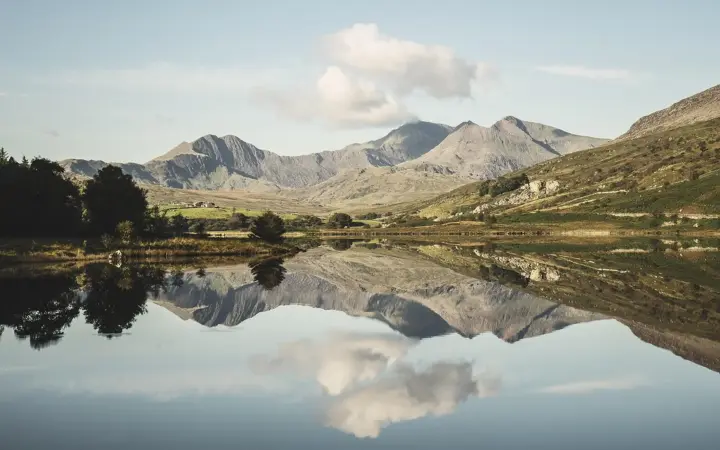
Eryri National Park is home to Yr Wyddfa (Snowdon), the highest mountain in Wales at 1,085 metres, which you can climb on foot or by a mountain railway from Llanberis. The castles of Caernarfon, Conwy, Harlech and Beaumaris are a UNESCO World Heritage Site.
Mid Wales
Quiet hills, red kites and the seaside university town of Aberystwyth on Cardigan Bay, where dolphins can often be seen. The narrow-gauge railways and wild moorland make it perfect for slow travel.
South Wales
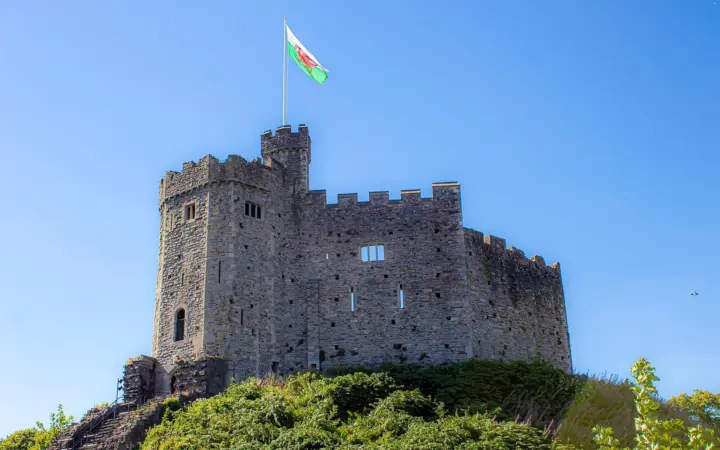
Cardiff, with its castle, bay and stadium; Swansea and the beaches of the Gower; the former mining towns of the South Wales Valleys; and Bannau Brycheiniog (Brecon Beacons) National Park, with waterfalls and open hills.
Pembrokeshire
Britain’s only coastal national park: golden beaches, sea cliffs, puffins on the islands and St Davids, the smallest city in the UK.
Best time to visit Wales
May to September is the best time for walking, beaches and long evenings. Spring and autumn are quieter and often beautiful on the trails, but the weather in the mountains can change fast, so always pack a waterproof. Winter is for cosy pubs, crisp walks and the Six Nations rugby season.
Dates worth planning around:
- St David’s Day, the national day, with parades and daffodils (1 March).
- Hay Festival of literature in Hay-on-Wye (late May to early June).
- National Eisteddfod, a festival of Welsh music and poetry (early August).
- Six Nations rugby at the stadium in Cardiff (February and March).
How to get around Wales
Getting there
Cardiff Airport has some international flights, but many visitors fly into Bristol, Manchester or Liverpool. Trains run from London to Cardiff and Swansea, and from Manchester and Chester along the north coast. Check whether you need a UK Electronic Travel Authorisation (ETA) before you travel: most visitors who do not need a visa, including EU citizens, must apply for one.
Trains, buses and heritage railways
Main lines follow the south and north coasts and cross Mid Wales to Aberystwyth. Wales also has many heritage steam railways, such as the Ffestiniog and Welsh Highland lines in Snowdonia.
Driving
A car is the easiest way to explore the mountains and coast. Drive on the left, and expect narrow, winding country lanes.
Wales itinerary ideas for a first trip
- One week in the north and Mid Wales: Llanberis and Yr Wyddfa, Caernarfon and Conwy castles, then down the coast to Aberystwyth.
- One week in the south: Cardiff, the Brecon Beacons, the Gower and Pembrokeshire.
- A long weekend: Cardiff and the castles and waterfalls nearby.
What to eat in Wales
Try cawl, a lamb and vegetable stew; Welsh rarebit, cheese on toast with ale and mustard; Welsh lamb; laverbread, made from seaweed, at breakfast; Glamorgan sausages, made with cheese and leeks; and sweet treats such as Welsh cakes and bara brith, a fruit loaf. Local beers, ciders and even Welsh whisky are worth a try.
Wales travel tips: what to know before you go
- Money: the currency is the pound sterling (GBP); contactless payment works almost everywhere.
- Language: everyone speaks English, but a friendly “diolch” (thank you) is always appreciated.
- Weather: pack layers and a waterproof at any time of year, especially for the mountains.
- Tipping: around 10 % in restaurants if service is not included; not expected at the bar.
- Plugs: type G, 230 V – most visitors need an adapter.
- Emergencies: call 999 (112 also works).
Wales travel FAQ
How many days do you need in Wales?
A long weekend for Cardiff or Snowdonia, and a week or more to combine the north, Mid Wales and the coast.
Do you need to speak Welsh?
No. Everybody speaks English, although you will see and hear Welsh everywhere.
Can you climb Snowdon without experience?
The main paths are popular, but it is a real mountain: check the weather, wear proper boots and start early, or take the mountain railway from Llanberis when it is running.
Is Wales part of England?
No. Wales is one of the four nations of the United Kingdom, with its own parliament (the Senedd), language and flag.