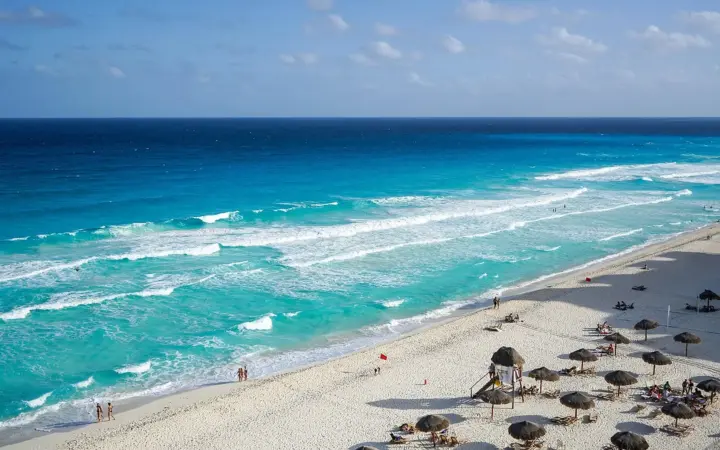




Cancún was built for the beach – and what a beach it is. Planned in the 1970s as a holiday destination, the city grew around a long, narrow strip of sand between the Caribbean Sea and the Nichupté Lagoon, now known as the Hotel Zone.
Why visit Cancún
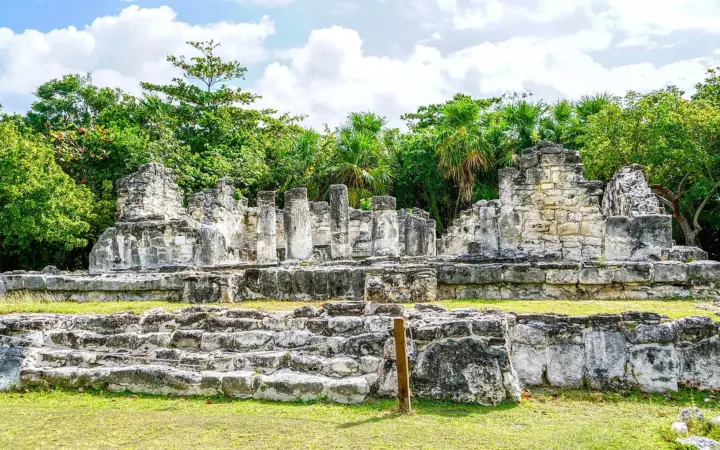
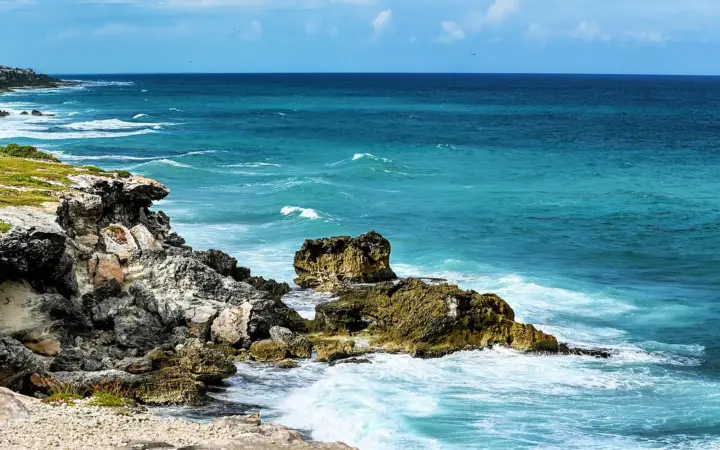
The sea is the star: turquoise water, fine white sand and coral reefs. But Cancún also has Maya history – the Maya Museum and the ruins of El Rey stand in the Hotel Zone – and it is the best base for exploring the Yucatán Peninsula.
Top things to do in Cancún
The beaches
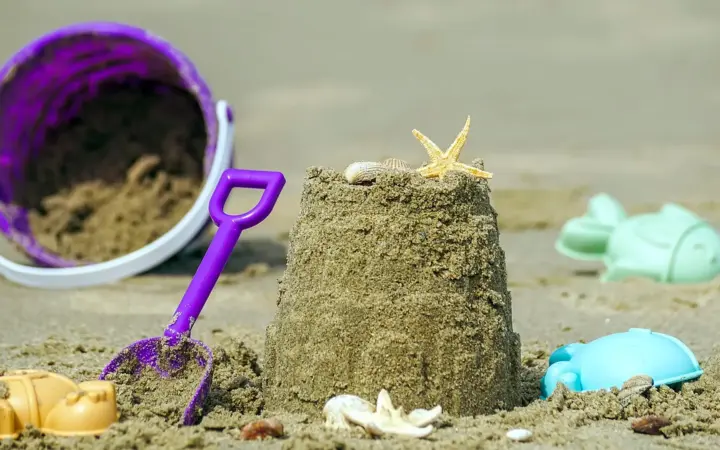
From calm Playa Caracol near Punta Cancún to the open-sea Playa Delfines with its famous Cancún sign.
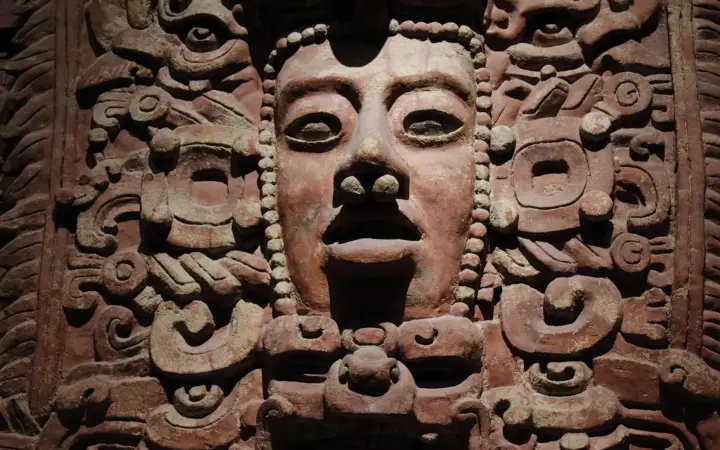
The Maya Museum and San Miguelito
Archaeological treasures from Quintana Roo, with a small Maya site in the museum grounds.
El Rey archaeological zone
A Postclassic Maya site in the Hotel Zone, home to dozens of iguanas.
The underwater museum (MUSA)
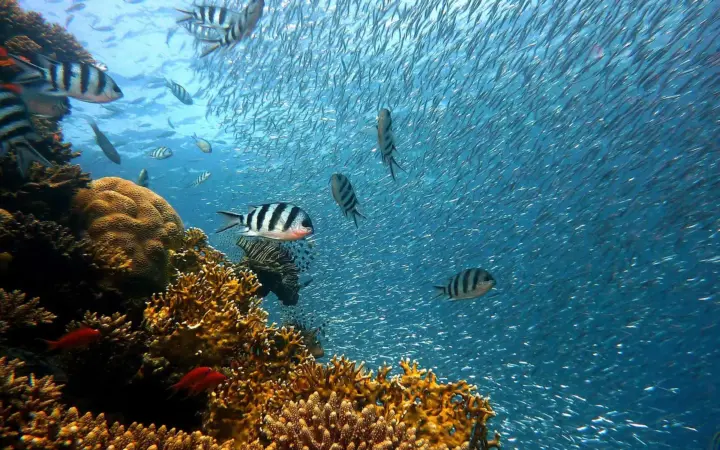
Hundreds of sculptures on the seabed, seen by snorkelling, diving or from a glass-bottom boat.
Isla Mujeres
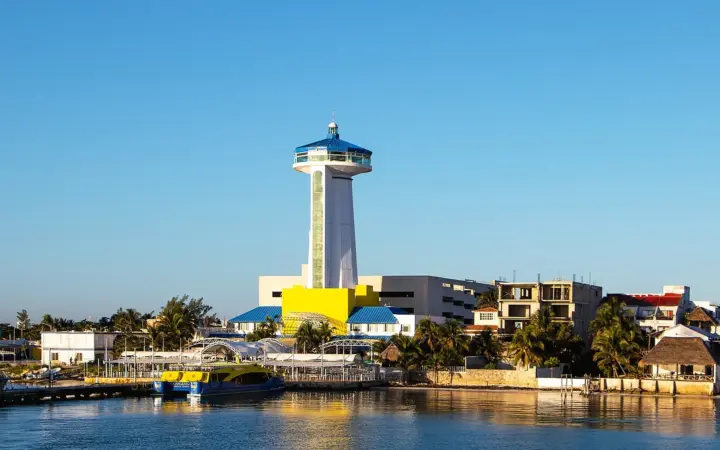
A small island a short ferry ride away, with the calm water of Playa Norte.
Downtown Cancún
Local life, markets and taquerías around the Parque de las Palapas.
Best time to visit Cancún
December to April is the dry season, with sunshine and lower humidity – and the most visitors. Hurricane season runs from June to November, with the highest risk from August to October. Seaweed (sargassum) can reach some beaches in the warmer months: check conditions before you go.
Getting to and around Cancún
Cancún International Airport is about 20 minutes from the Hotel Zone. Buses run the length of Boulevard Kukulcán, linking the hotels with downtown, and ADO buses connect Cancún with Playa del Carmen, Tulum and Mérida.
What to eat in Cancún
Cochinita pibil, sopa de lima, fresh ceviche, tacos al pastor and, for dessert, a crispy marquesita.
Cancún travel tips
- Check the beach flags: some beaches have strong currents.
- Use reef-safe sunscreen when you swim near the reefs.
- Plan a day trip to Chichén Itzá, Tulum or the cenotes.