


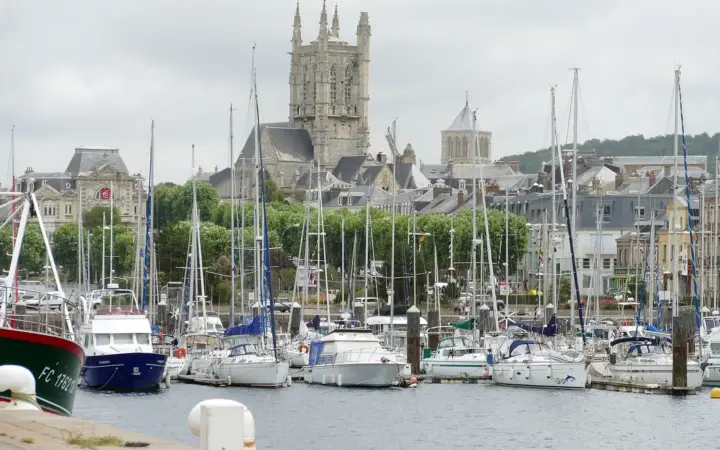
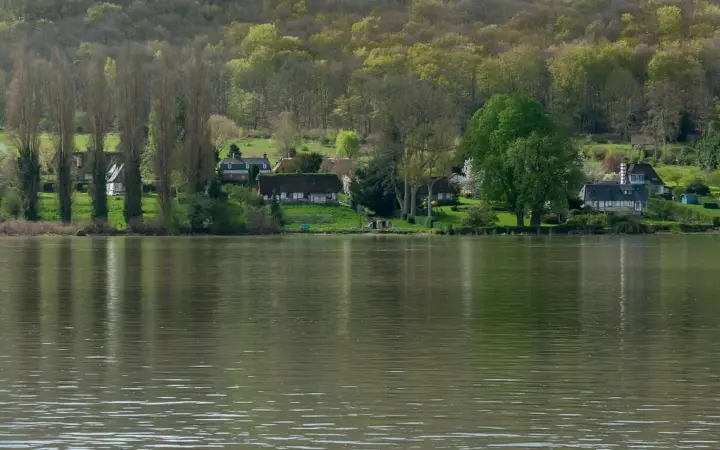
Normandy is where France meets the sea – and history. Here the tide races around Mont-Saint-Michel, white cliffs drop into the Channel at Étretat and the D-Day beaches remember the summer of 1944. Add apple orchards, half-timbered villages and some of the best cheese in France, and you have one of the country’s most rewarding regions. This Normandy travel guide helps you plan it.
Why visit Normandy
Normandy offers world-famous landmarks within easy reach of Paris, but it never feels like a big-city day trip. Its landscapes – green fields, cows, orchards, harbours – are gentle and timeless, and they inspired the Impressionist painters.
It is also a place of remembrance: the Allied landings of 6 June 1944 began the liberation of Western Europe, and the beaches, museums and cemeteries are deeply moving.
Top places to visit in Normandy
Mont-Saint-Michel
A Gothic abbey crowning a rocky island in a vast bay. Walk up through the village, visit the abbey and stay until evening, when the day-trippers leave. Check the tide tables: at the highest tides the island is surrounded by water.
The D-Day beaches
Omaha, Utah, Gold, Juno and Sword, the American Cemetery at Colleville-sur-Mer, Pointe du Hoc and the museums at Arromanches and Caen. Allow at least a full day.
Étretat and the Alabaster Coast
Dramatic white cliffs and natural arches that Monet painted again and again, with clifftop paths and wide sea views.
Honfleur and Rouen
Honfleur is a picture-perfect harbour of tall, slate-fronted houses. Rouen has a magnificent Gothic cathedral, half-timbered streets and the square where Joan of Arc died.
Giverny
Claude Monet’s house and gardens, with the famous water-lily pond and Japanese bridge, open from spring to autumn – an easy trip from Paris or Rouen.
Best time to visit Normandy
May to September brings the mildest weather and longest days. Expect changeable skies – a light raincoat is always useful. Early June is busy around the D-Day anniversary (6 June), with commemorations along the coast. Autumn is beautiful in the orchards, and winter is quiet, grey and atmospheric.
Getting to and around Normandy
Most visitors arrive via Paris. Trains link Paris with Rouen in about 1 hour 15 minutes and Caen in about two hours, and ferries connect Normandy with England. To explore the coast, the D-Day beaches and the villages, a car is the best option; organised tours are a good alternative for the landing beaches.
Normandy itinerary ideas
- Three days: Giverny, Rouen, Honfleur and Étretat.
- Five days: add Bayeux, the D-Day beaches and Mont-Saint-Michel.
- A week by car: the whole coast, from Étretat to Mont-Saint-Michel, with a day inland for cheese and cider.
What to eat in Normandy
Normandy is the land of butter, cream and apples. Try the cheeses – Camembert, Livarot and Pont-l’Évêque – mussels in cream (moules à la normande), sole meunière, and cider, pommeau and calvados, the apple brandy. For dessert: tarte normande with apples.
Normandy travel tips
- Mont-Saint-Michel: park on the mainland and take the free shuttle or walk across the bridge; arrive early or late to avoid crowds.
- The Bayeux Tapestry is due to be on loan to the British Museum in London until mid-2027 while its museum is renovated – check before you go.
- Pack for all weather: sun, wind and showers can come in one afternoon.
- Respect the memorials: the cemeteries are places of quiet remembrance.
Normandy FAQ
Can you visit Mont-Saint-Michel as a day trip from Paris?
It is possible, but it is a long day – about four hours each way. It is much better to stay a night nearby.
How many days do you need in Normandy?
Three days for the highlights near Paris, five days to a week to include the D-Day beaches and Mont-Saint-Michel.
Do you need a car in Normandy?
For the coast and the villages, yes. Rouen and Caen are easy to reach by train, and tours run from Bayeux to the beaches.