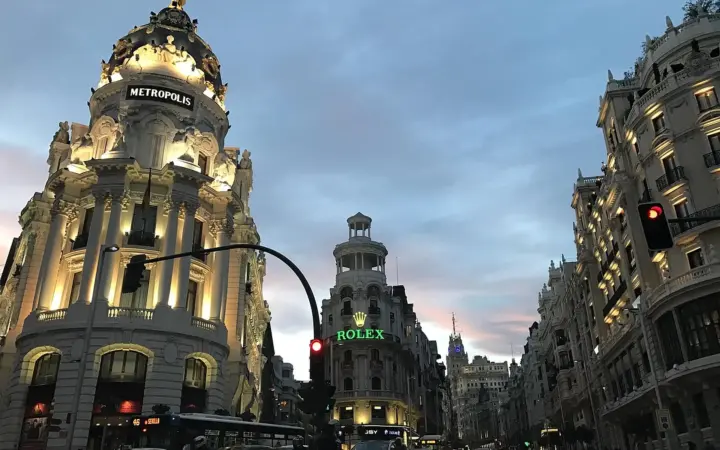





Madrid is a capital that lives in the street. With about 3.5 million people, Spain’s largest city combines some of the world’s greatest art museums with royal palaces, huge parks and neighbourhoods where tapas bars stay full until late. It sits on a high plateau in the very centre of the country, so the sky is often a deep blue.
Why visit Madrid
The Paseo del Prado and the Retiro, listed by UNESCO, hold three of Europe’s best art museums within a short walk. Beyond the art, Madrid is about its people and its rhythm: long lunches, vermouth on a terrace, and evenings that move from bar to bar.
Top things to do in Madrid
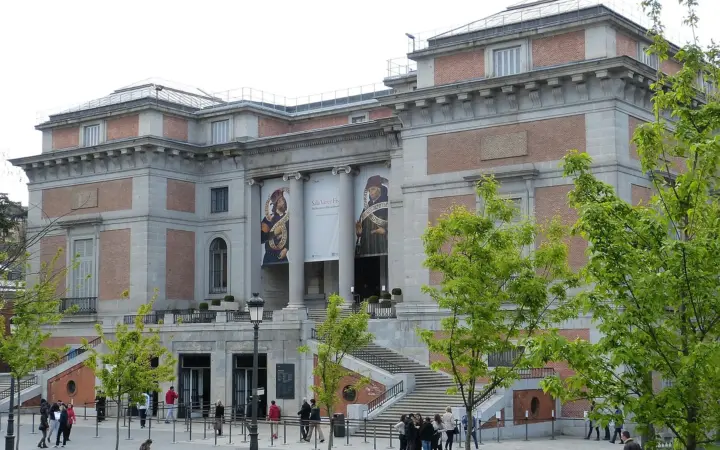
The Prado Museum
One of the world’s great museums, with masterpieces by Velázquez, Goya, El Greco and Bosch. Las Meninas alone is worth the visit.
The Reina Sofía and the Thyssen
The Reina Sofía is home to Picasso’s Guernica, while the Thyssen-Bornemisza covers eight centuries of European painting.
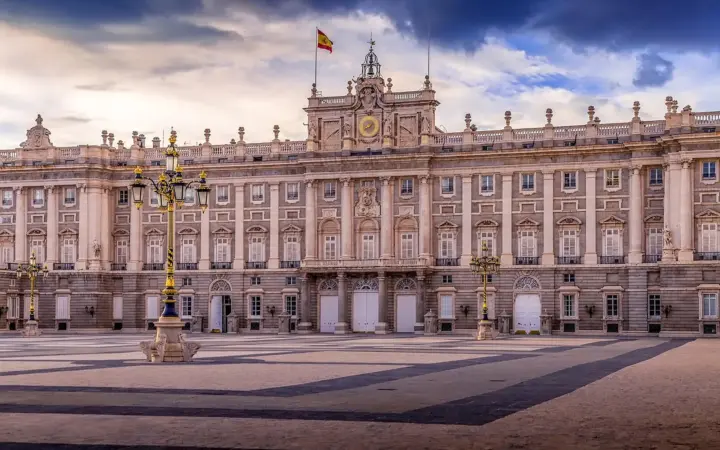
The Royal Palace and the Almudena
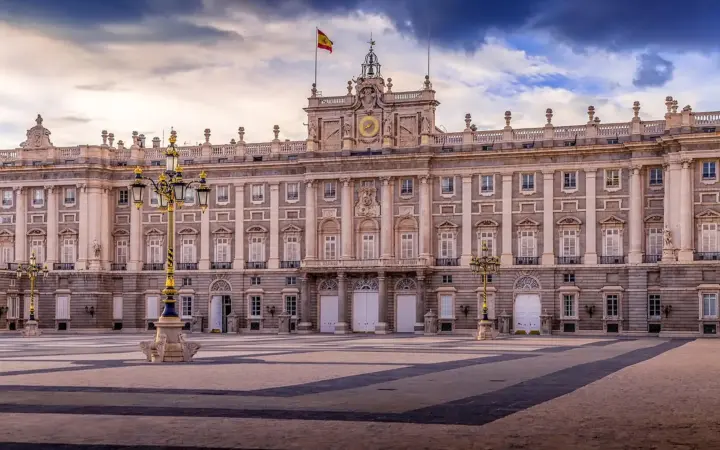
The official residence of the Spanish royal family, with lavish rooms and an armoury, next to the Almudena cathedral and the Sabatini gardens.
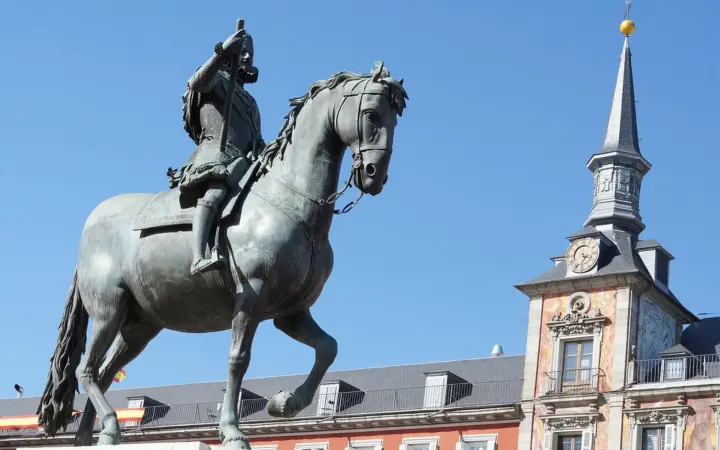
Plaza Mayor and Puerta del Sol
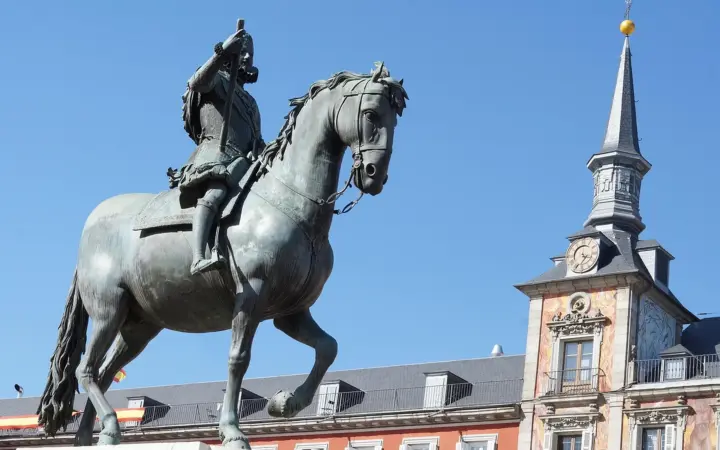
The arcaded Plaza Mayor and the busy Puerta del Sol, kilometre zero of Spain’s roads, are the heart of old Madrid.
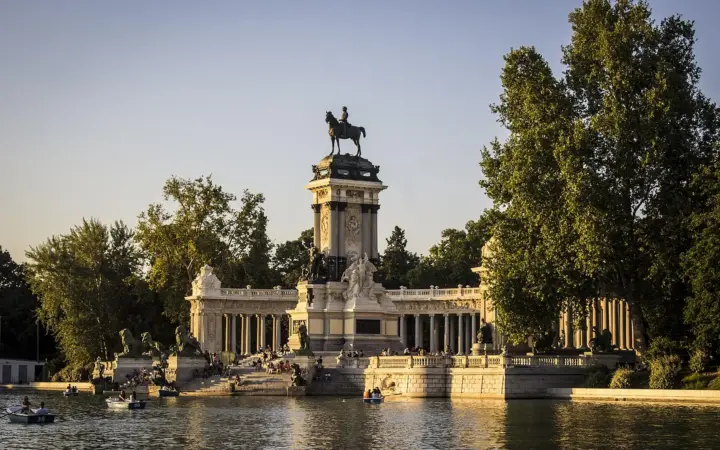
The Retiro Park
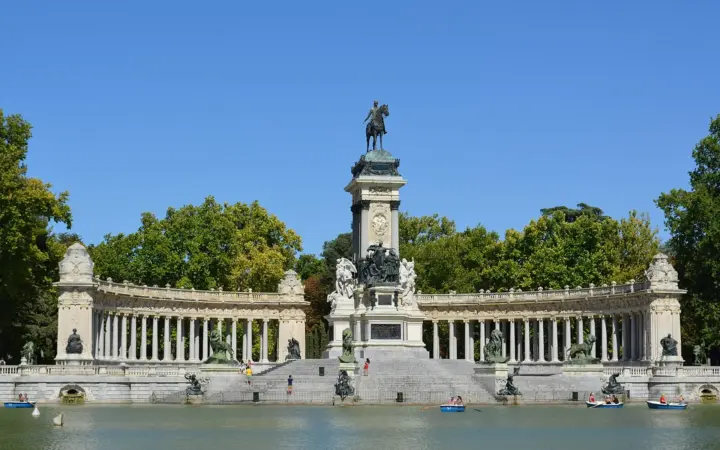
A huge park with a lake for rowing boats, the glass Crystal Palace and shady avenues – perfect on a Sunday.
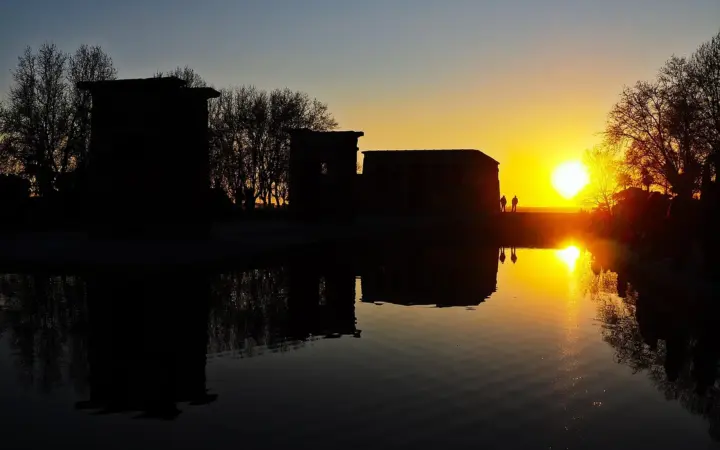
The Temple of Debod
An ancient Egyptian temple given to Spain, rebuilt in a park with one of the best sunset views in the city.
The best neighbourhoods
La Latina for tapas on Sundays after the El Rastro flea market, Malasaña and Chueca for bars and independent shops, Lavapiés for international food and Salamanca for elegant shopping.
Day trips from Madrid
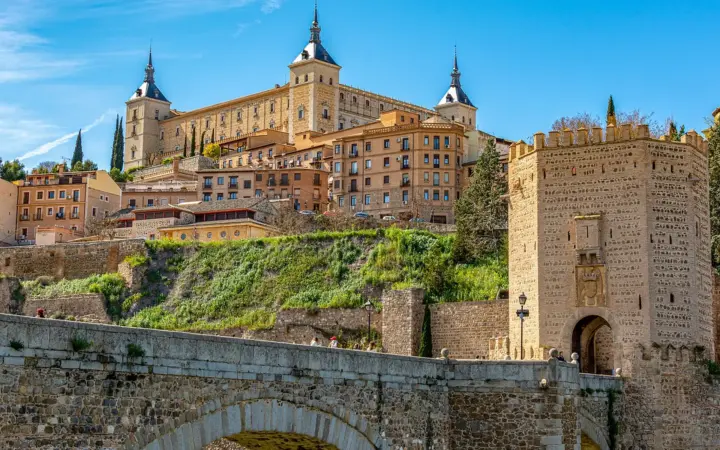
Toledo and Segovia are about 30 minutes away by high-speed train, and El Escorial, Alcalá de Henares and Aranjuez can be reached by commuter train.
Best time to visit Madrid
Spring and autumn are perfect for walking. July and August are very hot and many locals leave the city. Winter is cold but often sunny, and the museums are less busy.
Getting to and around Madrid
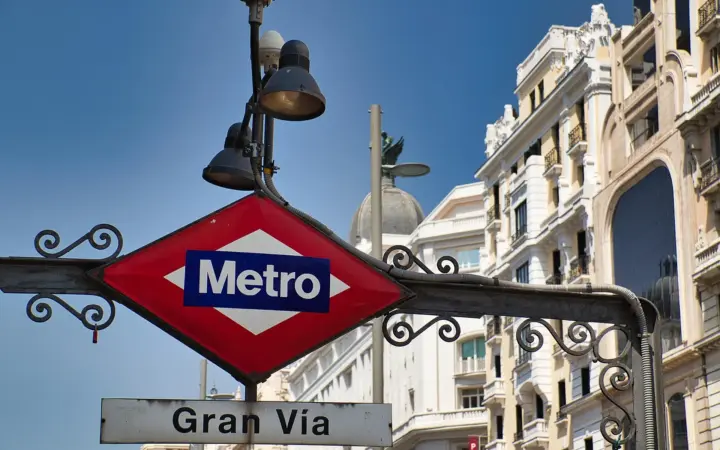
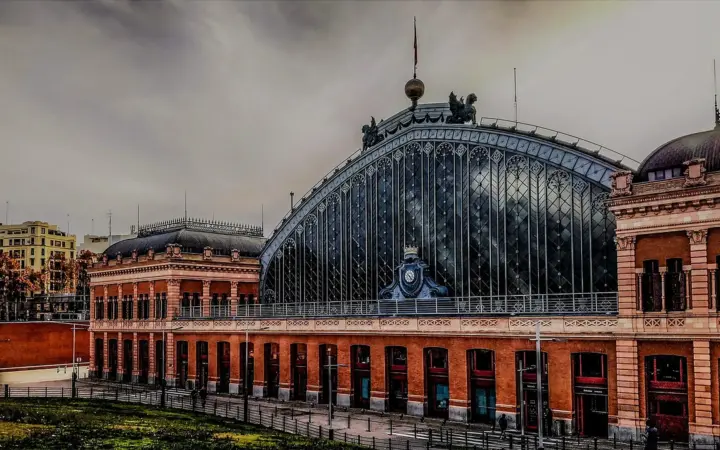
Madrid–Barajas airport is linked to the centre by metro line 8, commuter trains and the airport express bus. The metro is fast, cheap and covers the whole city. Atocha and Chamartín stations have high-speed trains to most of Spain.
What to eat in Madrid
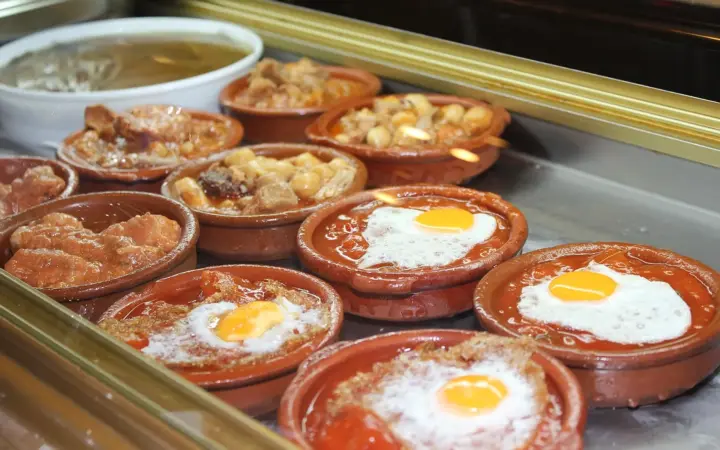
Cocido madrileño, callos, a bocadillo de calamares near Plaza Mayor, huevos rotos, churros with chocolate and a glass of vermouth before lunch.
Madrid FAQ
How many days do you need in Madrid?
Three days are enough for the main museums, the old town and a few neighbourhoods; add a day for Toledo or Segovia.
Is Madrid good for a weekend?
Yes. The centre is compact, the metro is easy and there is something open almost at any hour.