


Marche (often called “the Marches” in English) lies on the Adriatic side of central Italy, between the Apennines and the sea. Its landscape of soft hills, fields and walled towns reminds many visitors of Tuscany, with far fewer crowds.
Why visit Marche
For art, countryside and coast in a quieter setting. The region has one of the jewels of the Italian Renaissance, a varied coastline and dozens of hill towns where daily life still sets the pace.
Top places in Marche
Urbino
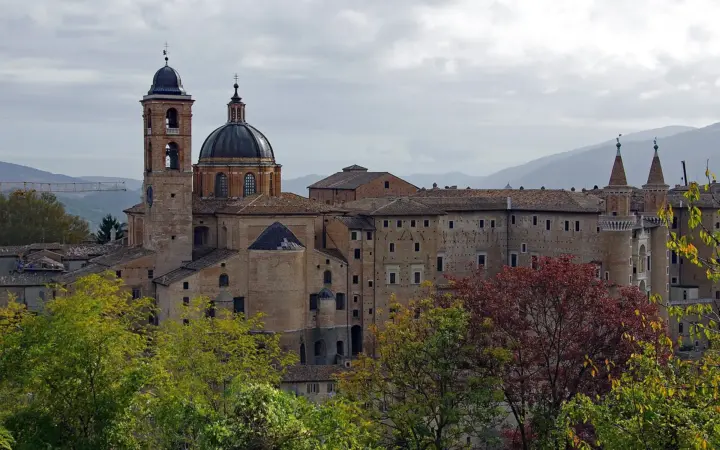
A UNESCO-listed Renaissance city on two hills, home to the magnificent Ducal Palace of Federico da Montefeltro and the birthplace of the painter Raphael.
The Conero Riviera
White limestone cliffs and pebble coves south of Ancona, with the seaside villages of Sirolo and Numana.
The Frasassi Caves
One of the largest cave systems in Italy, with huge halls full of stalactites and stalagmites.
The Sibillini Mountains
A national park of high meadows, lakes and lentil fields that bloom in early summer.
Hill towns
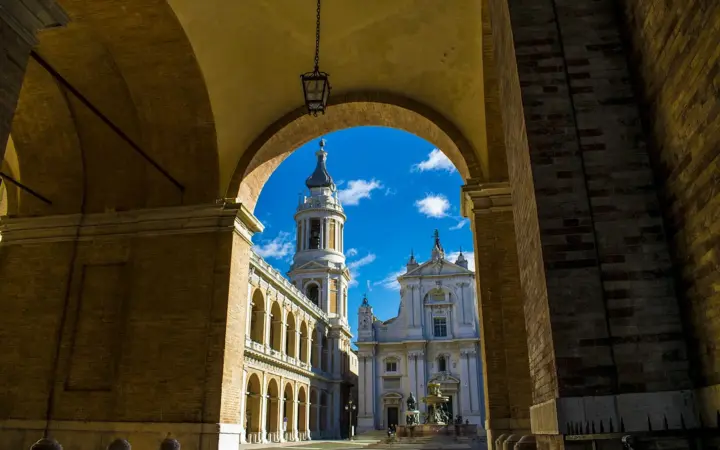
Recanati, home of the poet Leopardi, Loreto and its basilica, Macerata, Ascoli Piceno and many smaller villages such as Filottrano.
Best time to visit Marche
May, June, September and October are ideal for towns and countryside. July and August suit a beach holiday on the coast.
Getting to and around Marche
Ancona airport has some European flights, and Bologna is about two hours away. Trains run along the coast; a car is the easiest way to reach the hill towns and the mountains.
What to eat in Marche
Olive all’ascolana (stuffed fried olives), vincisgrassi (a rich baked pasta), fish soup (brodetto) on the coast, truffles from Acqualagna and Verdicchio white wine.
Marche FAQ
Is Marche a good alternative to Tuscany?
Yes: hills, art and food of a similar quality, with fewer visitors and a more local feel.
How many days do I need in Marche?
Four or five days for Urbino, the Conero coast and a few hill towns.