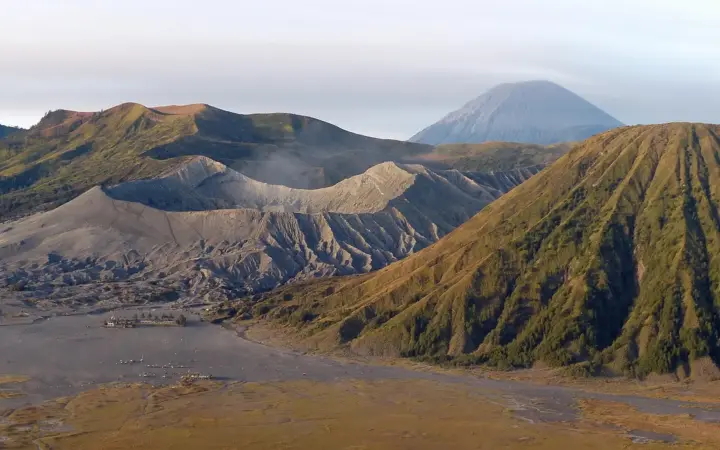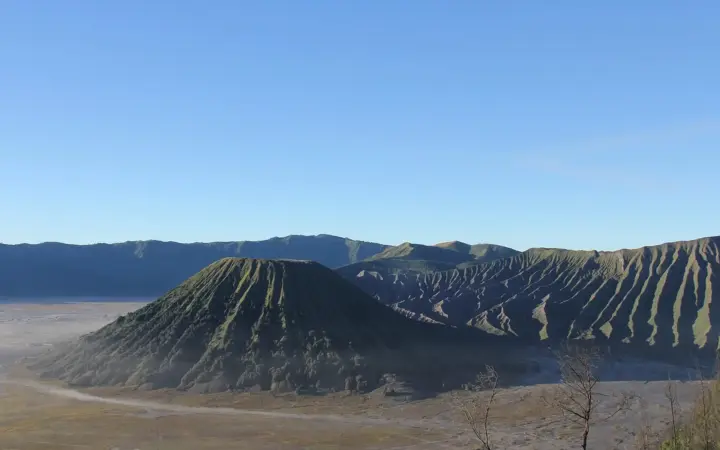




Cemoro Lawang is a small village of the Tengger people perched at about 2,200 metres on the rim of the Tengger caldera, in Bromo Tengger Semeru National Park. From its last houses the road drops into the Sea of Sand, and the smoking cone of Mount Bromo rises straight ahead.
Why stay in Cemoro Lawang
Because it is the closest place to sleep for Bromo. Staying here means no night drive from Probolinggo or Malang: you can walk to the sunrise viewpoints or cross the Sea of Sand to the crater on foot, and enjoy the caldera after the day visitors have left.
Things to do in Cemoro Lawang
Sunrise over Bromo
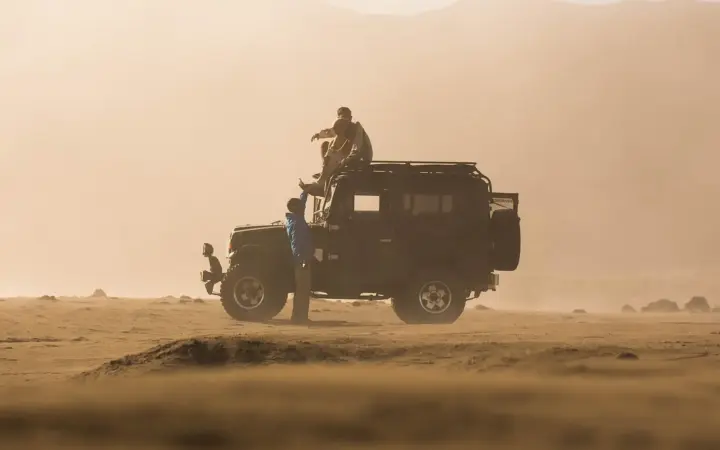
The classic viewpoints on Mount Penanjakan, such as King Kong Hill and Seruni Point, look over the whole caldera with Bromo, Batok and, behind them, the summit of Semeru. Jeeps leave before dawn, but some viewpoints near the village can be reached on foot.
The Bromo crater
Walk across the Sea of Sand past the Hindu temple of Luhur Poten, then climb the steps to the crater rim to look down into the steaming vent. The walk from the village takes about an hour.
Tengger culture
The Tengger people keep their own Hindu traditions. During the Yadnya Kasada ceremony, held once a year, offerings are thrown into the crater of Bromo.
Best time to visit Cemoro Lawang
May to September is the dry season, with the clearest sunrises. Nights are cold all year, often close to freezing before dawn, so bring warm clothes. From November to March clouds and rain are common. Access to the crater can be restricted when volcanic activity increases.
Getting to Cemoro Lawang
The usual route is from Probolinggo, on the railway and bus lines between Surabaya and Banyuwangi, about an hour and a half below the village by minibus or car. Surabaya airport (SUB) is about three hours away. From Malang, jeeps reach Bromo from the other side of the park.
Cemoro Lawang FAQ
Do you need a jeep for the sunrise?
Not always: some viewpoints are within walking distance, but a jeep is the easiest way to reach Penanjakan before dawn.
How cold is it at night?
Very: at about 2,200 metres, temperatures can drop close to zero before sunrise, especially in the dry season.