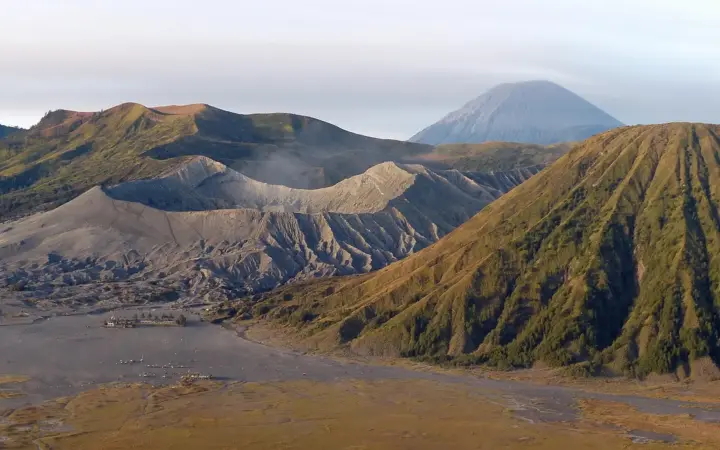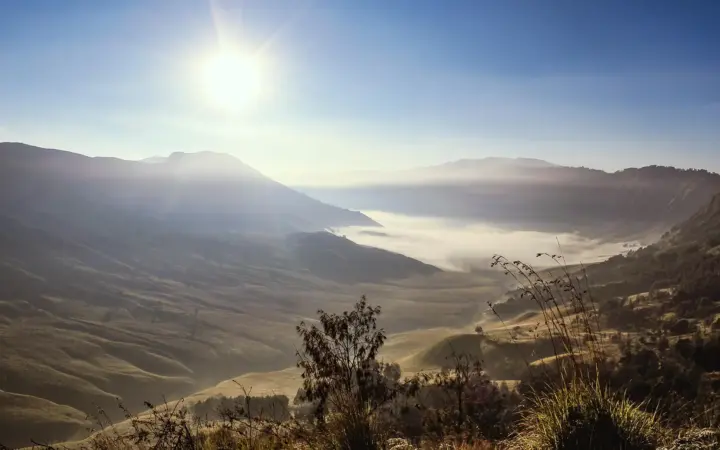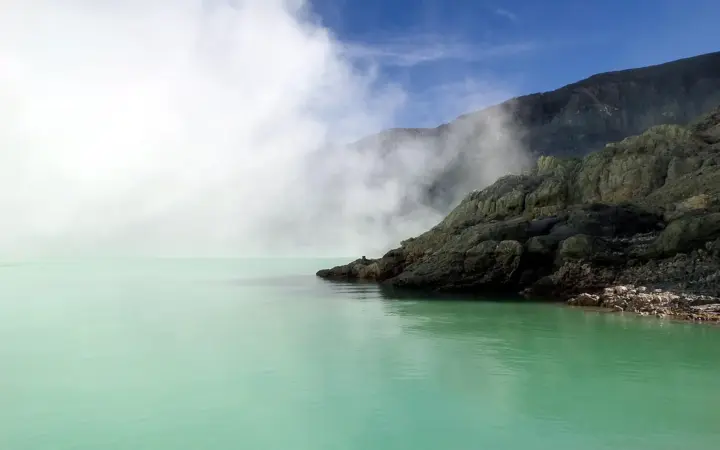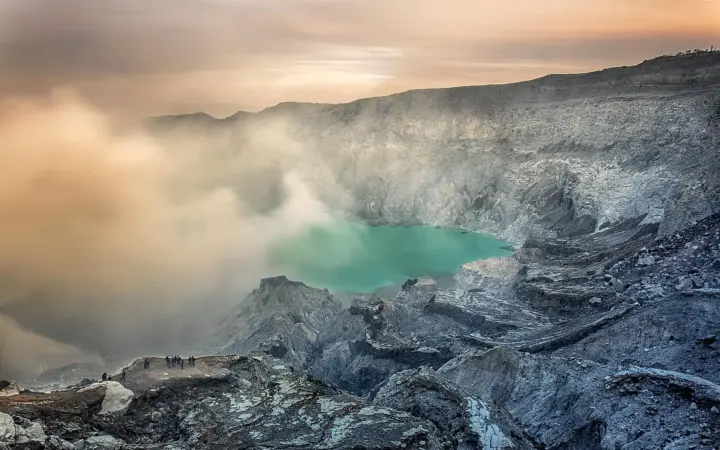


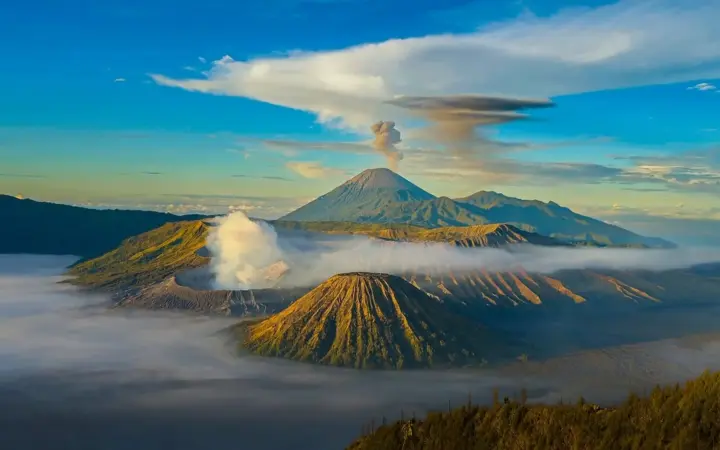
East Java is the eastern third of the island of Java, between Central Java and the strait that separates it from Bali. Its capital, Surabaya, is Indonesia’s second city, but most travellers come for the volcanoes: the crater of Mount Bromo at sunrise and the blue fire of Ijen are two of the great sights of Southeast Asia.
Why visit East Java
For volcano landscapes you can actually walk into, cool highland towns, plantations of coffee and cocoa, and national parks with savanna, rainforest and wild beaches. East Java is also the natural land route between Yogyakarta and Bali, so it fits easily into a first trip to Indonesia.
Top places to visit in East Java
Mount Bromo
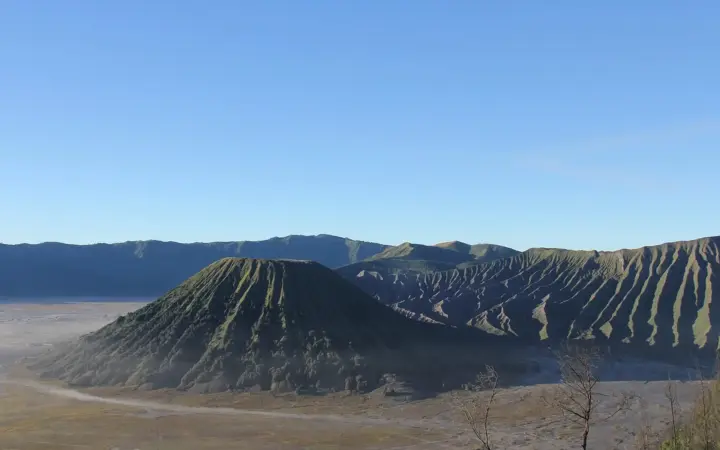
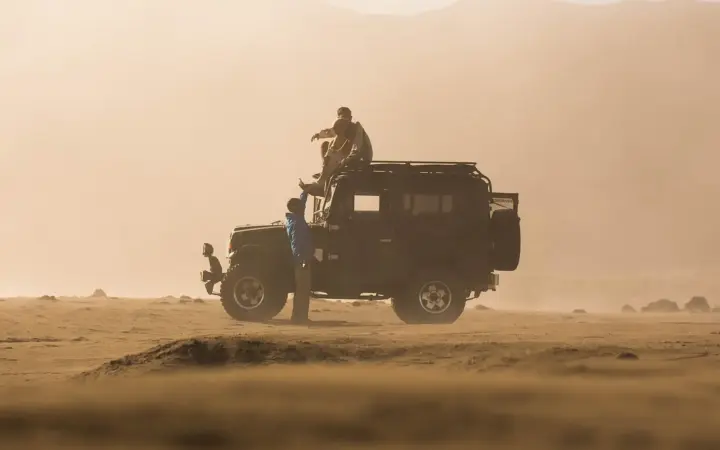
In Bromo Tengger Semeru National Park, the smoking cone of Bromo rises from a vast “sea of sand”. Watch the sunrise from the viewpoints above the caldera, then cross the sand and climb the steps to the crater rim. Behind it stands Semeru, the highest mountain in Java.
Ijen crater
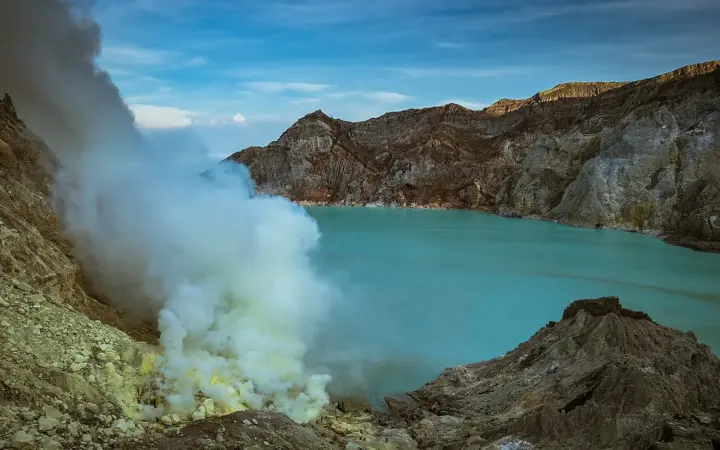
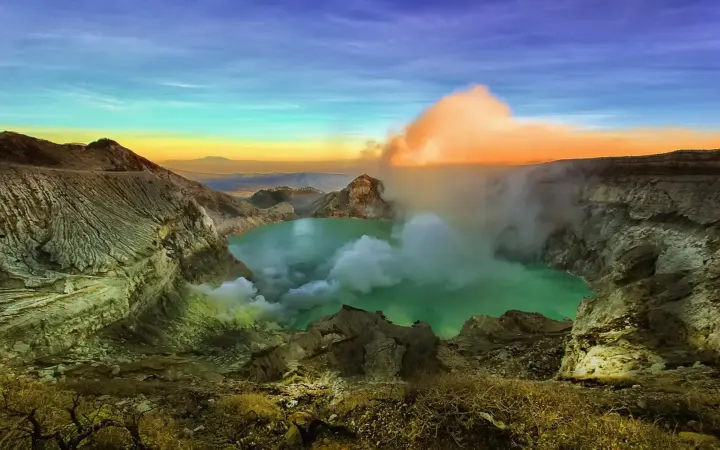
Night hikes climb to the rim of Ijen to see its rare blue fire, burning sulphur gas visible only in the dark, and the sunrise over the world’s largest acidic crater lake, a startling turquoise. Miners still carry sulphur down the slopes by hand.
Malang and Batu
Malang is a pleasant colonial-era city in the hills, with colourful villages and a cooler climate; nearby Batu is known for apple orchards and family attractions. The huge Tumpak Sewu waterfall lies to the south.
Banyuwangi and the national parks
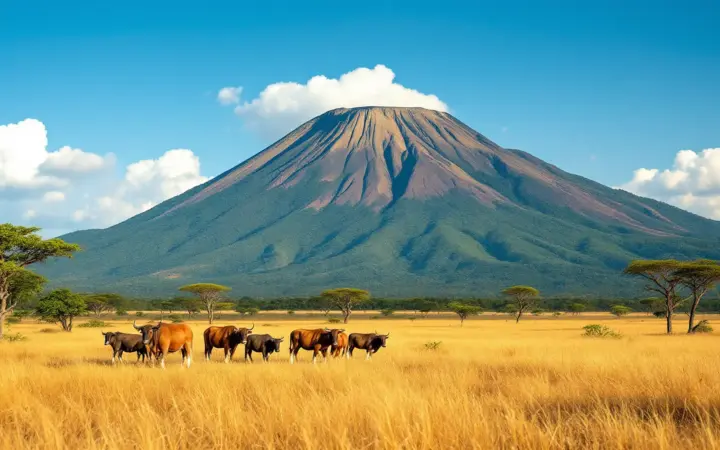
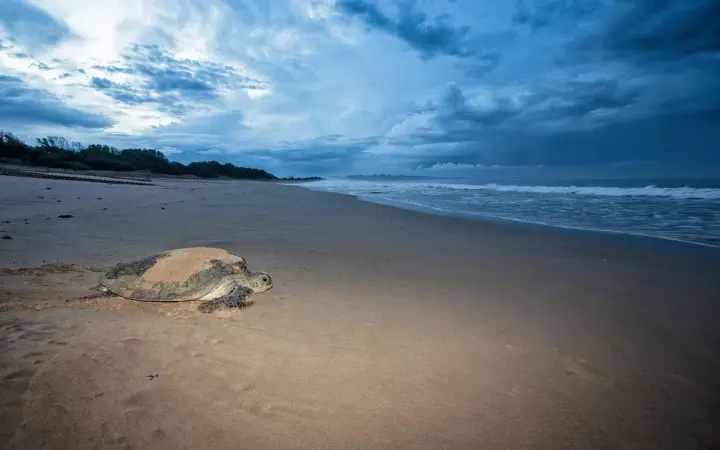
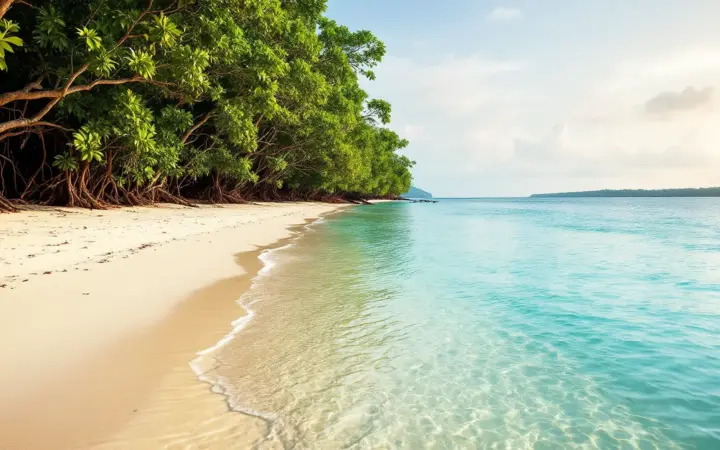
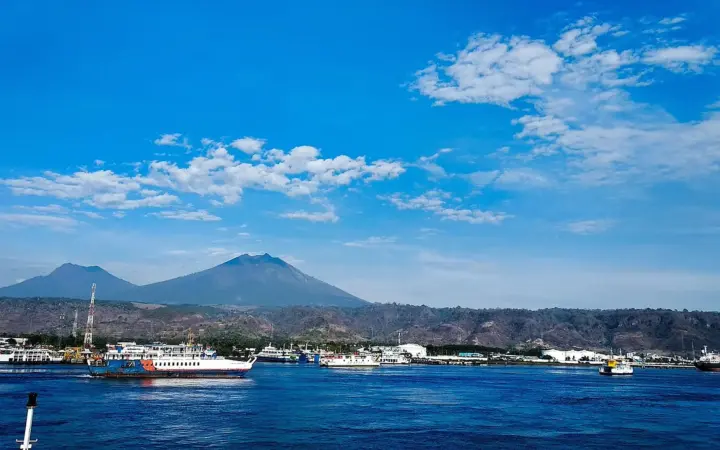
At the eastern tip of the island, Banyuwangi is the base for Ijen and for three national parks: the savanna of Baluran, sometimes called “Africa van Java”, the forests and surf of Alas Purwo, and Meru Betiri, where turtles nest on Sukamade beach. Its ferry port, Ketapang, is about an hour from Bali.
Madura
Across the Suramadu Bridge from Surabaya, the island of Madura is famous for its bull races and its satay.
Best time to visit East Java
May to September is the dry season, with the clearest sunrises over Bromo and Ijen; nights on the volcanoes are cold all year. November to March is the rainy season: hikes are still possible, but views are often cloudy. Volcano access can close when activity increases, so check the current status before you go.
Getting to and around East Java
Surabaya’s Juanda airport (SUB) has the most flights, and there are smaller airports at Malang (MLG) and Banyuwangi (BWX). Trains run from Jakarta and Yogyakarta to Surabaya, Malang and Banyuwangi. For Bromo and Ijen, most visitors book a jeep tour or a car with driver, as the volcanoes are far from public transport.
East Java itinerary ideas
- 3 days: Bromo sunrise on day one, the drive east on day two, the Ijen night hike on day three, then the ferry to Bali.
- 5 days: add Malang and Tumpak Sewu, or a day in Baluran or Meru Betiri.
What to eat in East Java
Rawon (a black beef soup coloured with keluak nuts), soto Lamongan, rujak cingur (a salad with peanut and shrimp sauce), lontong balap from Surabaya, bakso Malang meatballs and pecel, vegetables with spicy peanut sauce. Banyuwangi has its own dishes, such as nasi tempong.
East Java travel tips
- Pack warm clothes: the Bromo viewpoints and the Ijen rim can be close to freezing before dawn.
- Bring a proper mask for Ijen: sulphur fumes can be strong at the crater; guides usually provide gas masks.
- Plan the distances: Bromo and Ijen are about six hours apart by road.
East Java FAQ
Bromo or Ijen: which is better?
Both are worth it: Bromo for its sunrise landscape, Ijen for the blue fire and the turquoise lake. Many travellers do both in three days.
Can you get from East Java to Bali easily?
Yes. From Banyuwangi’s Ketapang port, ferries cross to Gilimanuk in Bali around the clock in about an hour.